
Cucumber Green Mottle Mosaic Virus vs Potassium Deficiency
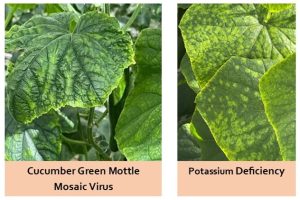
Yellowing, mottling, and curling cucumber leaves can be caused by either cucumber green mottle mosaic virus (CGMMV) or a potassium deficiency. Because the symptoms often look similar in early stages, greenhouse growers frequently misdiagnose the problem. In this guide, we explain the visual differences between CGMMV and potassium deficiency in cucumbers, including how symptoms spread, which leaves are affected first, and what treatment options are available.
What Doers Potassium Deficiency Look Like in Cucumbers?
According to Dr W. G. Owen, University of Kentucky, “Potassium deficiency of greenhouse cucumbers may be initially observed as chlorosis (yellowing) of the older lower leaf margins. As symptoms progress, interveinal chlorosis and firing (necrosis) of the leaf margin and interveinal regions will develop while the leaf midrib and veins remain green.”
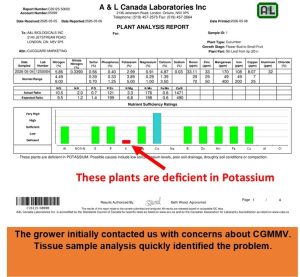 The lab analysis on the left shows how the confusion can develop and how quickly the problem can be solved. In late April, 2026, we contacted one of our CuGuard customers to monitor his use of the product. (Customer follow-up, especially with long time users of CuGuard, is part of our service.) Imagine our concern when the grower suggested that CuGuard might not be doing it’s job. The grower told us that he saw clear signs of green mottle in his greenhouse. Our CEO, Greg Patterson saw the pictures that the grower sent to us but had a completely different reaction. After one look at the pictures he called the grower and requested tissue samples. Sure enough: low Potassium.
Symptoms of CGMMV vs Potassium Deficiency
|
Symptom |
CGMMV |
Potassium Deficiency |
|
Leaf pattern |
Mosaic/mottled patches |
Yellowing along edges |
|
Spread pattern |
Random and systemic |
Starts on older leaves |
|
Fruit symptoms |
Distorted or mottled fruit |
Usually poor fruit development |
|
Contagious |
Yes |
No |
|
Treatment |
Remove infected plants |
Apply potassium fertilizer |
|
New growth |
Often distorted |
Usually smaller but normal shape |
Low Potassium: Cause & Effect
Young plants establish yield potential in the vegetative stage. After flowering a grower can only maintain the yield potential that a plant has already established. Plants use nitrogen and potassium at a 1:1 ratio throughout the growing season. However, during the yield development stage that ratio is 1 part nitrogen to 3 parts potassium.
Potassium is the main driver for yield. It’s important that potassium levels are adequate at this early stage as yield can’t be made up later. Adjusting potassium levels early is important to maintain yield potential.
Boron Impact on Potassium.
Boron stops the efflux of potassium from plant tissue. It’s important, therefor, to maintain boron levels in an adequate range and maintain a calcium to boron ratio between 450:1 and 550:1. Too high a ratio also reduces boron availability.
Low Potassium & Mites.
Low Potassium and Boron levels in plants allow a non-essential amino acid, asparagine, to accumulate. Asparagine attracts insects such as mites. Low Potassium levels also open the plant up to disease such as powdery mildew. A treatment for this is Millstop, a potassium carbonate.
Monitoring Potassium levels early in tissue development allows for adjustment of tissue Potassium levels. To avoid these issues:
- Adopt a weekly schedule of tissue sample analysis.
- Increase Potassium feed or
- Foliar feed products like potassium carbonate.
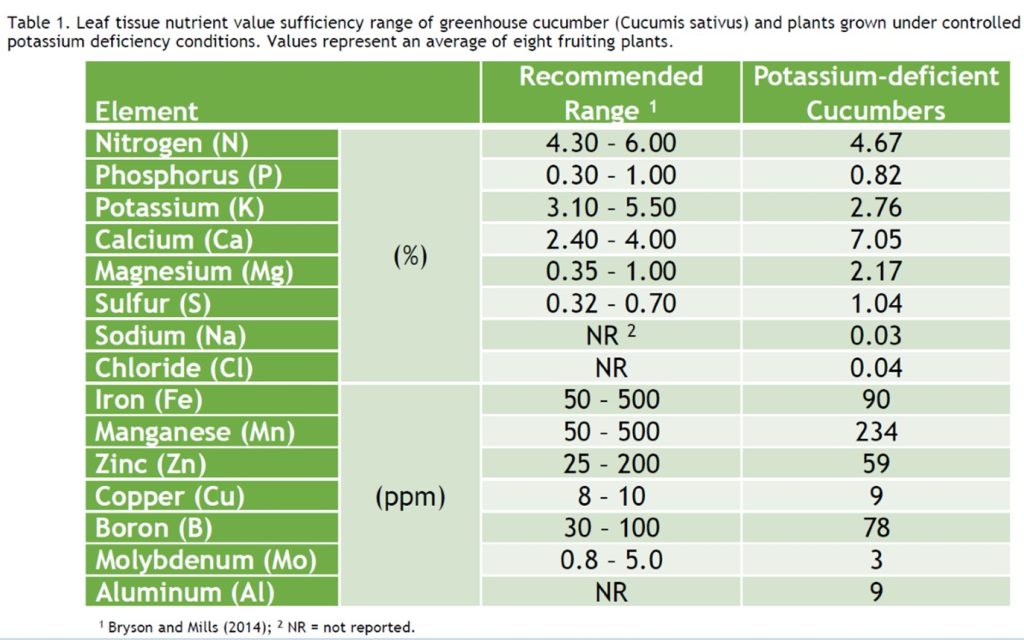 Dr. Owen identifies recommended and Potassium deficient cucumber nutritional ranges.
Reaction to Plant Stress, e.g. from Inoculation of CuGuard.
At A&L Biological we notice that plants react to the injection of CuGuard vaccine as they build immunity to CGMMV.. It takes a lot of plant energy to build an immunity to the virus. Potassium levels can drop in tissue as a result. A grower needs to be aware of this relationship and be ready to adjust potassium feed to help the plant deal with the increased energy demand. At this point it’s easy to confuse CGMMV with low Potassium.
Another approach is to treat plants as early as possible with our Bio 7. Bio 7 has proven remarkably effective is preventing plant stress. It helps plants maintain balanced nutrient levels and helps plants retard the development of asparagine when under stress.
Frequently Asked Questions
- Can potassium deficiency look like mosaic virus?
Yes. Early potassium deficiency can resemble mosaic virus because both may cause leaf discoloration and mottling. - What are the first signs of CGMMV?
Early symptoms include light and dark green mottling, leaf blistering, and distorted young growth. - Does CGMMV stay in soil?
CGMMV can survive on tools, debris, greenhouse surfaces, and contaminated seed material. - Can cucumber plants recover from potassium deficiency?
Yes. Potassium deficiency can usually be corrected with balanced fertilization and proper watering.
Conclusion.
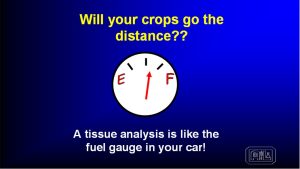 Maintaining balanced nutrition levels, especially for the key inputs that promote yield, will be first line of defense in diagnosing the causes of cucumber leaf chlorosis. The second line of defense is weekly tissue testing.